Transform
Returns, differences and stationarity checks by asset class.
 THEO VERDELHAN - PortfolioLIVE MARKET INTERFACE
 BTC/USDT—
LATENCY—
CASE 07 · ECONOMETRICS
Mixed-frequency US GDP forecasting.
Daily multi-asset and macro-financial data.
Replication plus post-COVID extension.
Approximately one quarter of information.
A short, difficult 2024–2025 window.
RESEARCH DESIGN
The target is quarterly while predictors arrive daily or monthly. MIDAS preserves high-frequency ordering with a parsimonious lag function.
Returns, differences and stationarity checks by asset class.
Individual predictors or PCA factors with mixed-frequency timing.
ADL–MIDAS with exponential Almon weights and AIC lag selection.
Recursive expanding-window evaluation without future information.
RMSFE against Random Walk, AR, ADL and factor benchmarks.
DATA & EVIDENCE
Coverage, transformations, recursive weights and period-by-period errors remain visible alongside aggregate forecast scores.
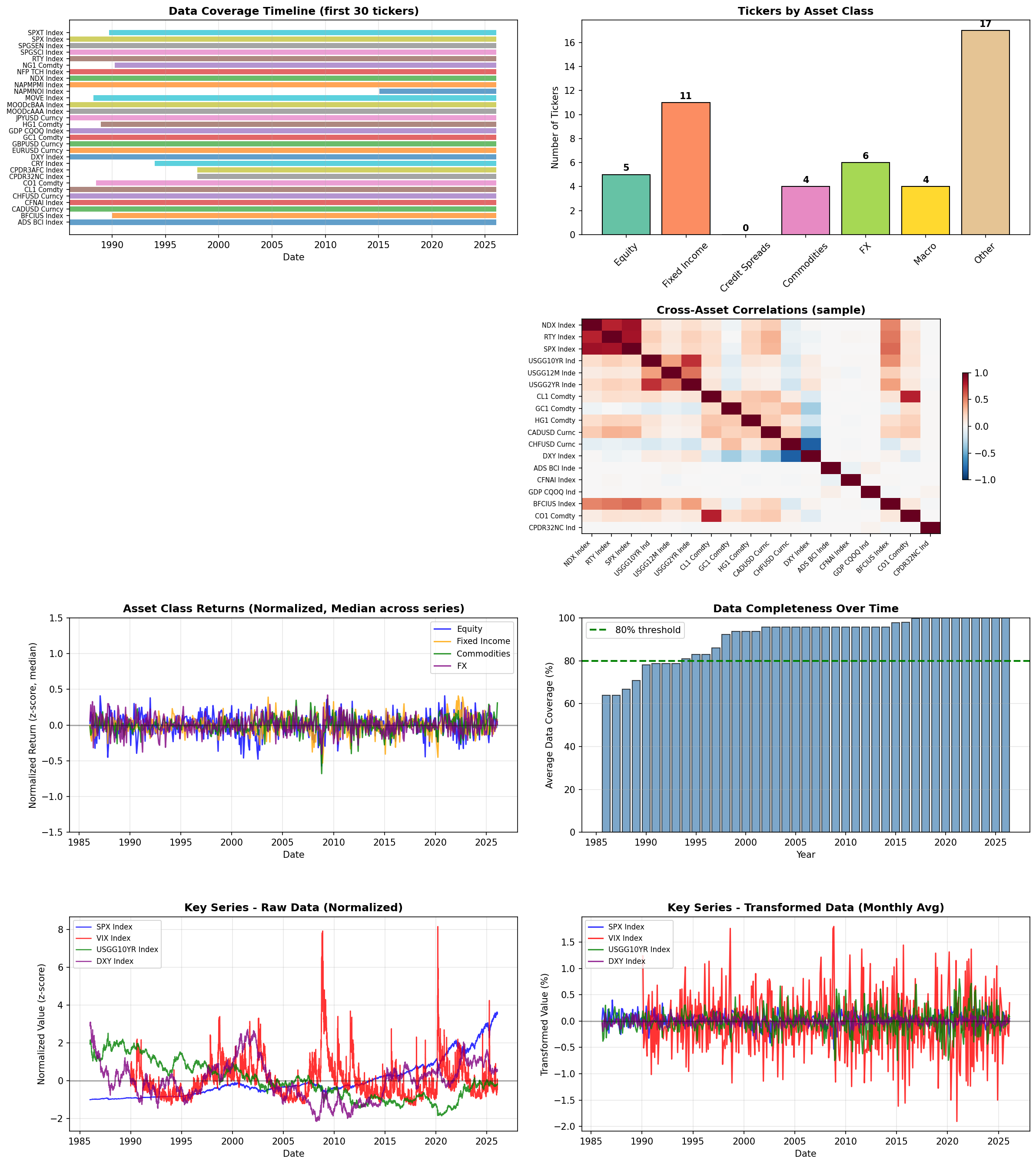
Unequal histories and completeness thresholds are audited before factor extraction.
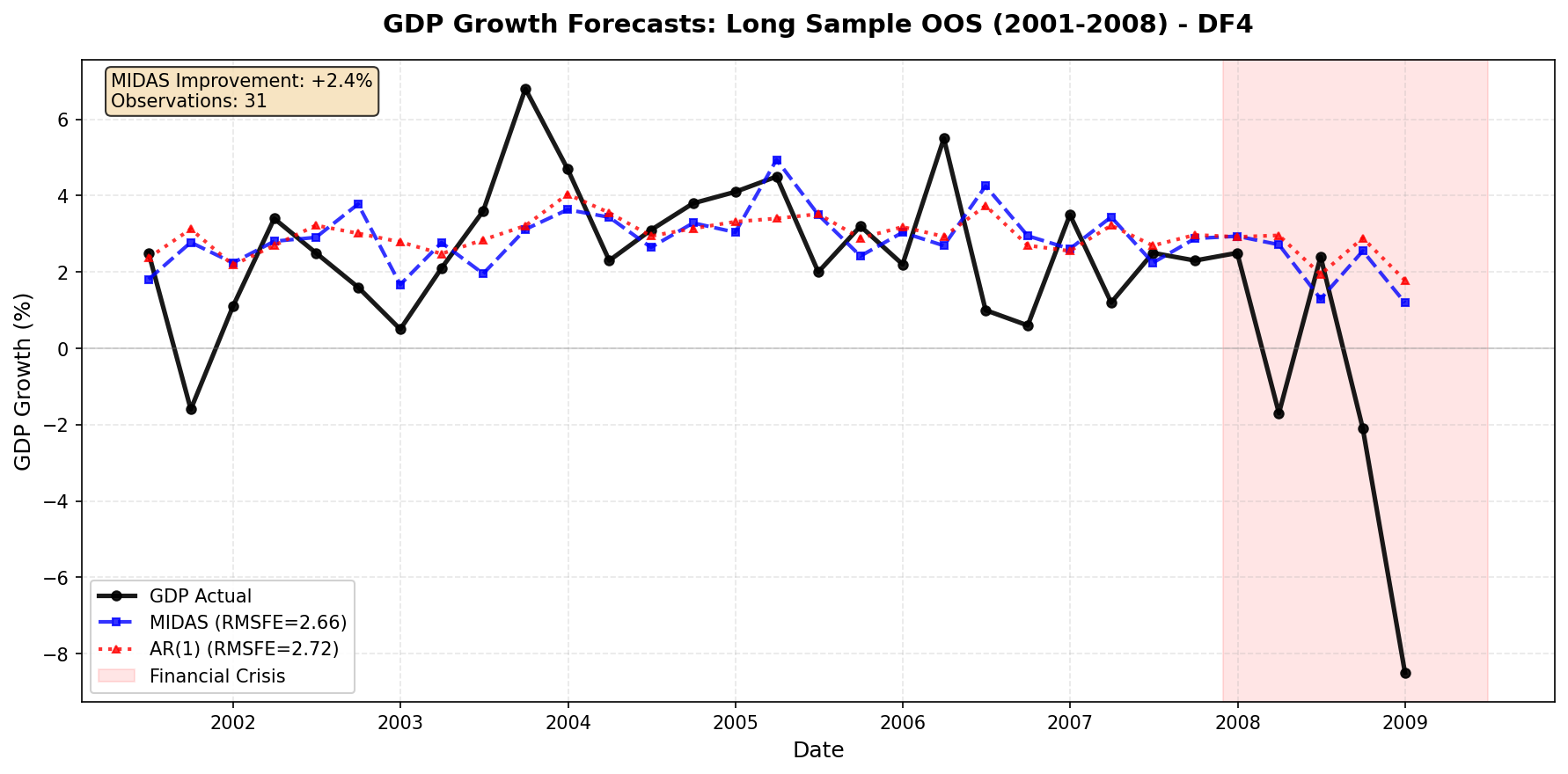
Forecast paths are compared with realized GDP under one recursive protocol.
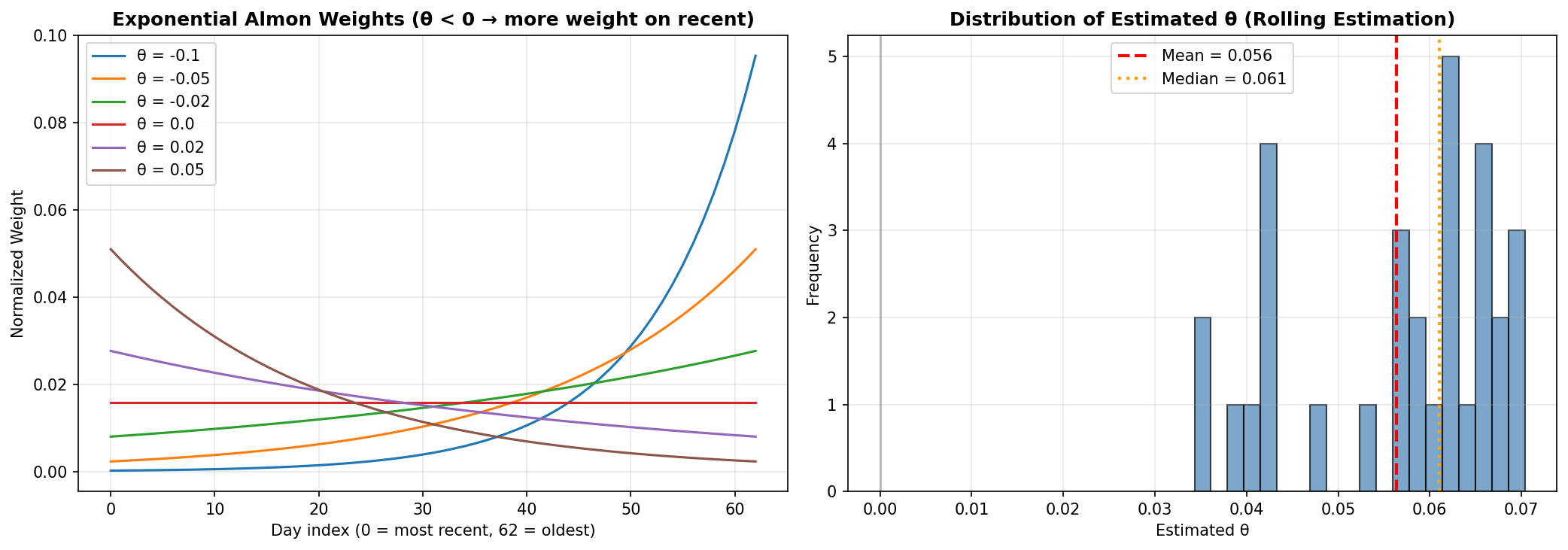
The estimated decay reveals how much information is assigned across 63 trading days.
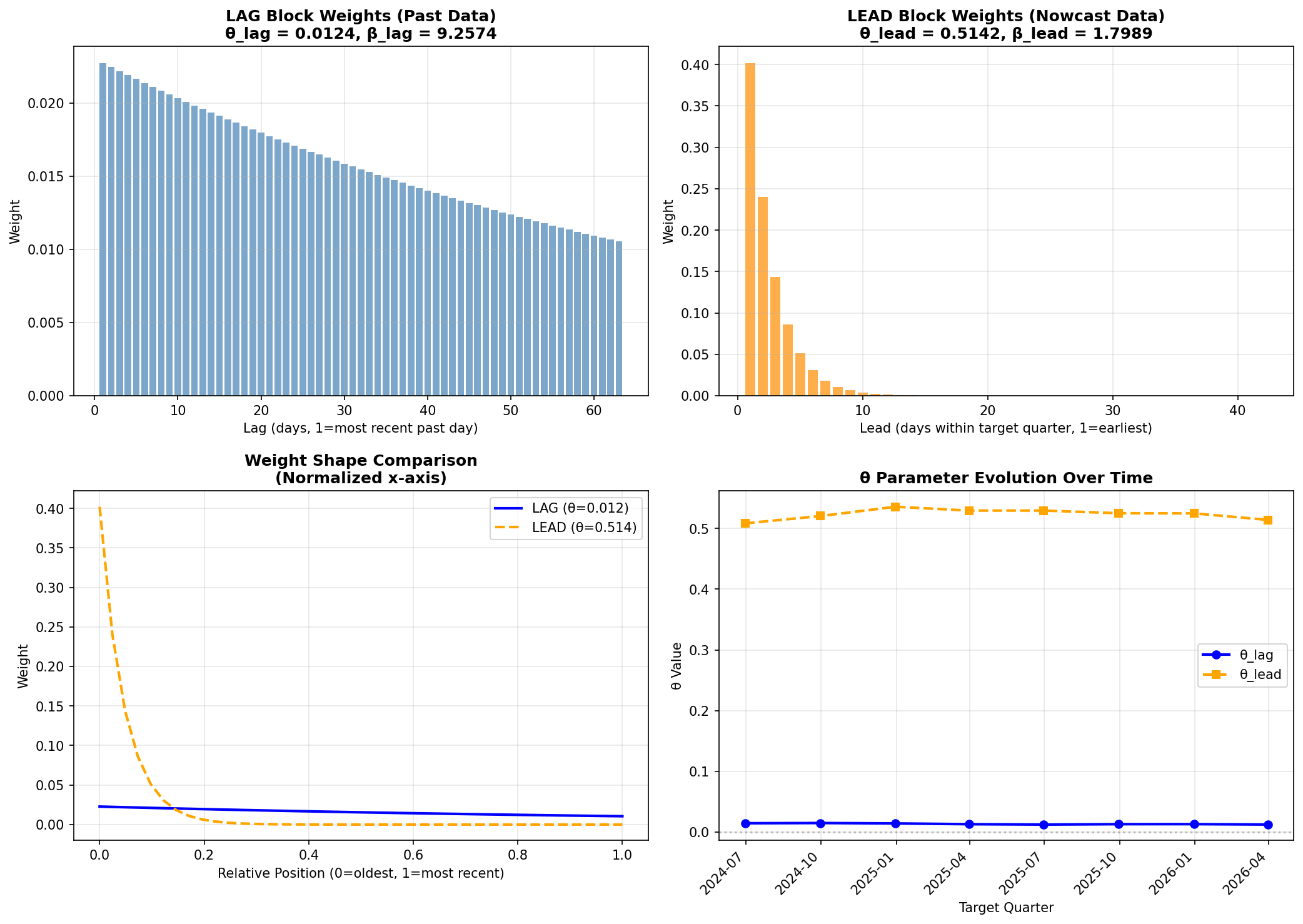
The extension removes the restriction that historical lags and current-quarter leads share one decay parameter.
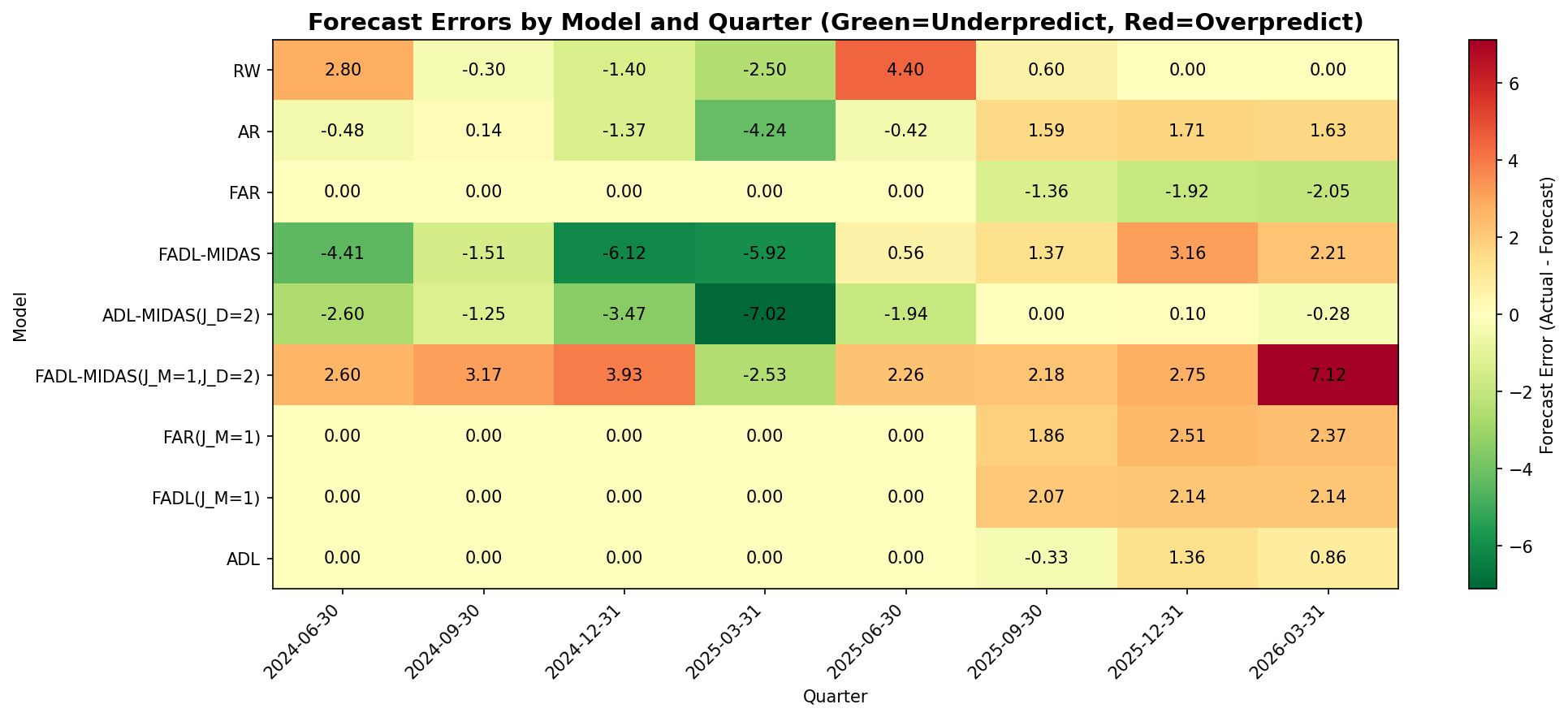
A short recent sample can make model rankings depend on very few quarters.
CORE FINDING
High-frequency financial information can improve the historical forecast exercise, but model choice, leads and the information block matter more than simply increasing complexity.
LIMIT
Eight out-of-sample quarters are insufficient for strong general claims. The Two-β extension fixes one weight restriction, not every nowcasting challenge.